


What you gain from a planned removal
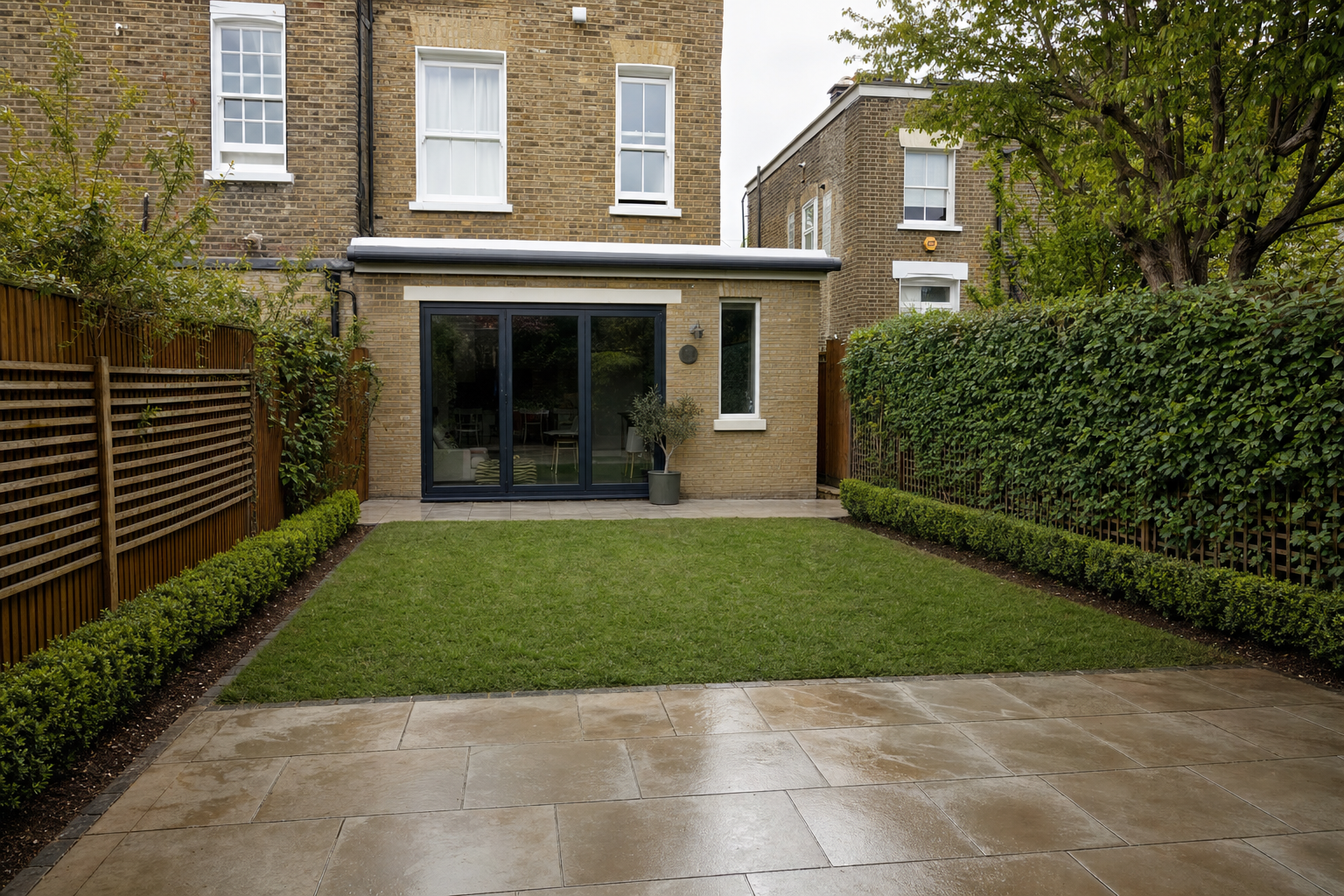
Control in tight spaces
Sectional dismantling keeps large trees manageable where gardens and boundaries are boxed in.
Clear advice before cutting
We assess condition, space and restrictions first, so removal is properly justified.
Ground ready for next use
Removal can be paired with stump work and clearance if the area needs reusing fast.
When removal is the safer, cleaner answer
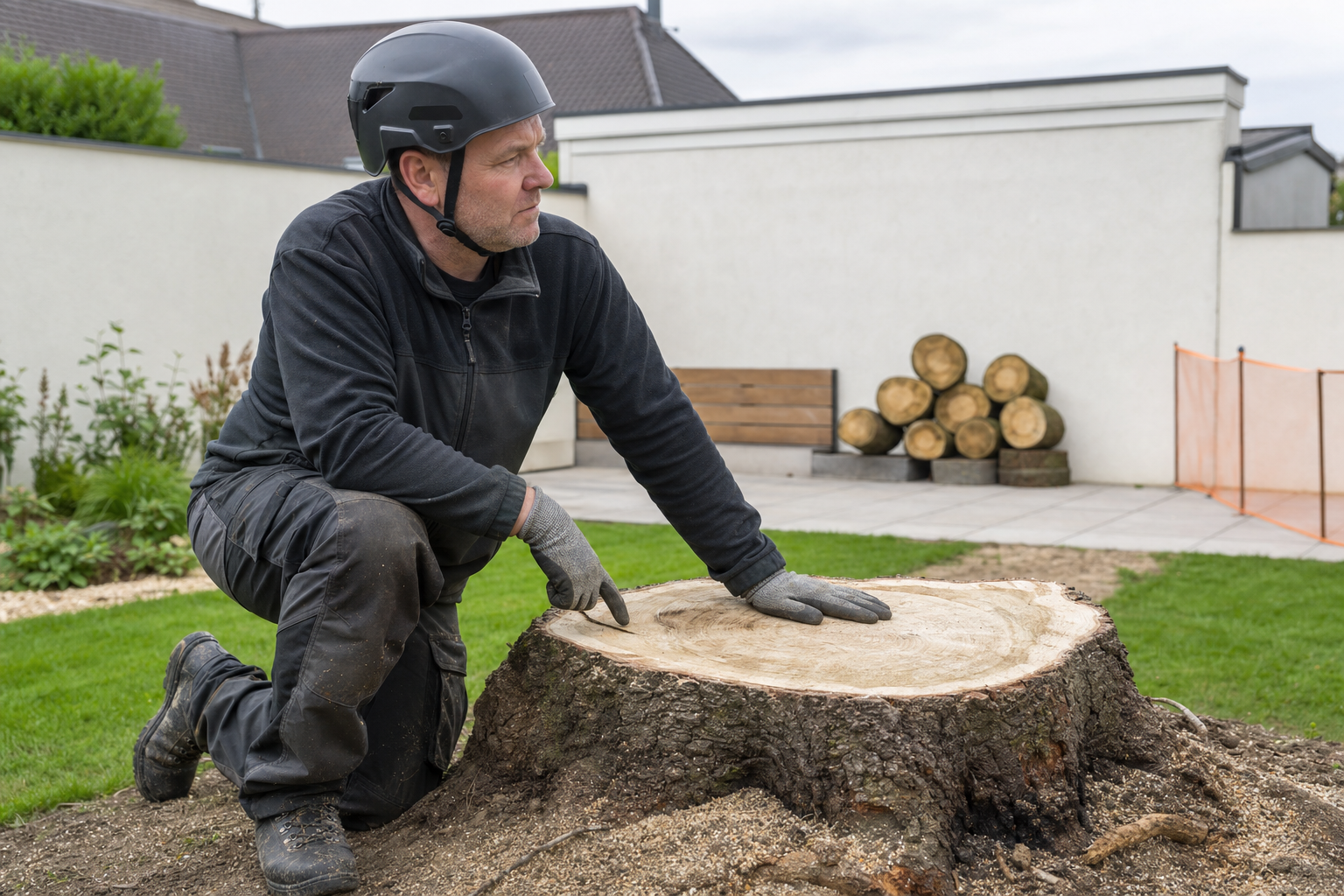
When a tree is dead, badly diseased, storm-damaged or simply too unstable to ignore, removal can be the practical answer. Sometimes the issue is quieter but still real: roots and growth start affecting a wall, branches crowd a roof, or a tree has outgrown the space available. We assess the tree's condition, height, lean and surroundings first, because the right method depends on more than the tree itself. In an open area, straight felling may be possible. In tighter gardens or busier sites, we use controlled sectional dismantling, taking the tree down piece by piece so the work stays measured rather than hopeful.
A removal plan shaped by the site
The site decides a great deal. We look at access, nearby structures, power lines, surrounding planting and the room available for lowering timber safely. That matters if you're preparing for building work, redesigning a garden or dealing with an immediate hazard that cannot be left in place. We explain why full removal is recommended, what equipment is needed and what happens to the waste afterwards. If the ground needs to be used again quickly, we can combine the job with stump grinding or clearance so you are not left with half a solution.
Frequently asked questions
Do all trees need sectional dismantling?
No. If there is enough open space and the tree can be felled safely in one direction, straight felling may be suitable. Where space is limited or there are sheds, fences, planting or cables nearby, we dismantle the tree in sections to keep control throughout the job.
Can you remove a tree close to a house or boundary?
Often, yes, but the method depends on the tree's size, lean, branch spread and the room available for climbing, rigging and lowering. We inspect the site first, then explain what can be done safely and what access, protection or traffic around the area needs to be managed.
What happens to the timber and branches afterwards?
We normally clear the cut material from site as part of the agreed work. If you'd like to keep logs or woodchip for your garden, we can discuss that during the assessment so the finish suits your plans rather than leaving you with an unexpected pile to deal with.