


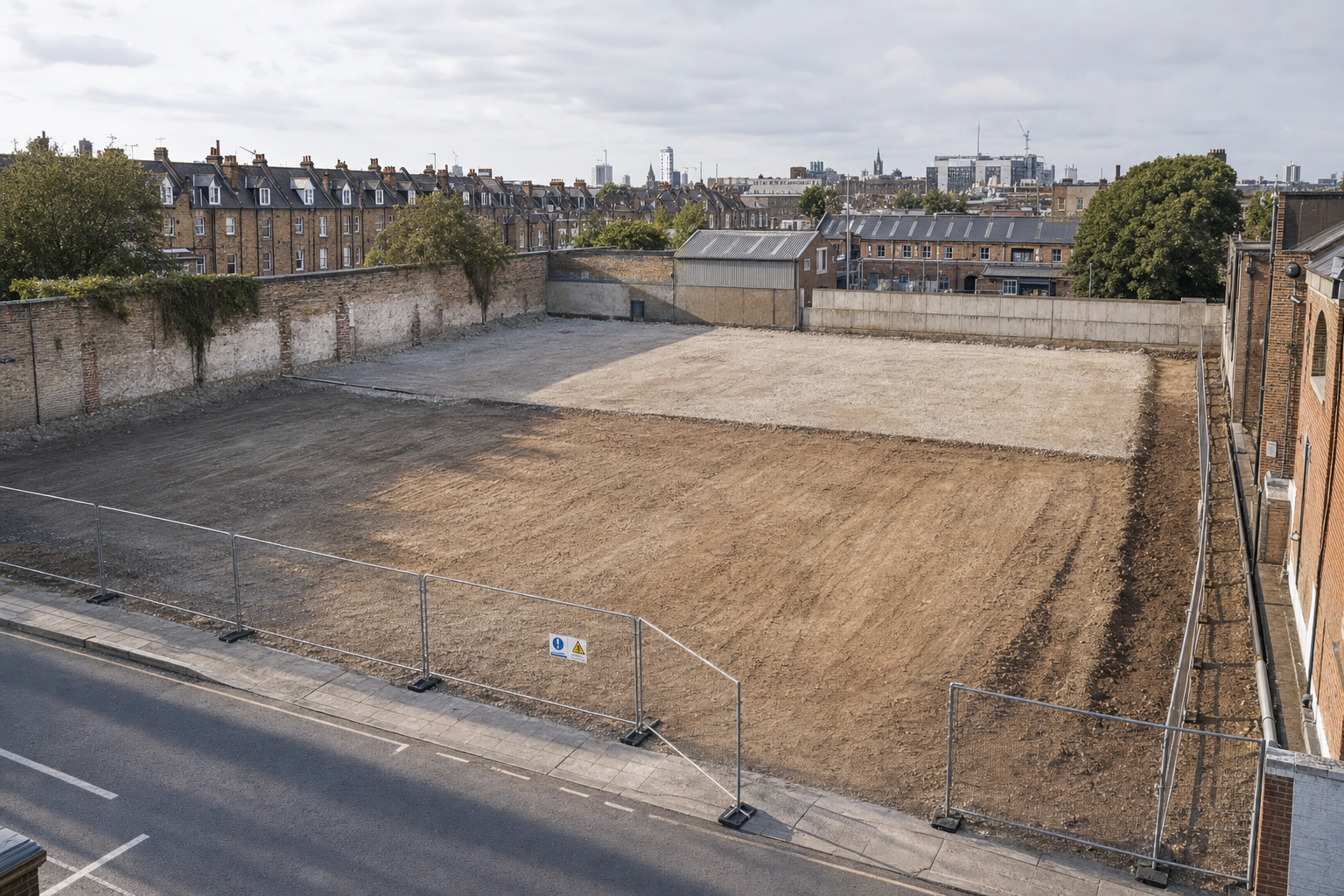
Why planning matters on clearance work
Scope agreed clearly
We identify what is being cleared and what falls outside the job before work begins.
Access kept workable
Work is sequenced so machinery and cut material do not trap the site mid-project.
Useful next-step ground
The cleared area is left ready for landscaping, building access or ongoing management.
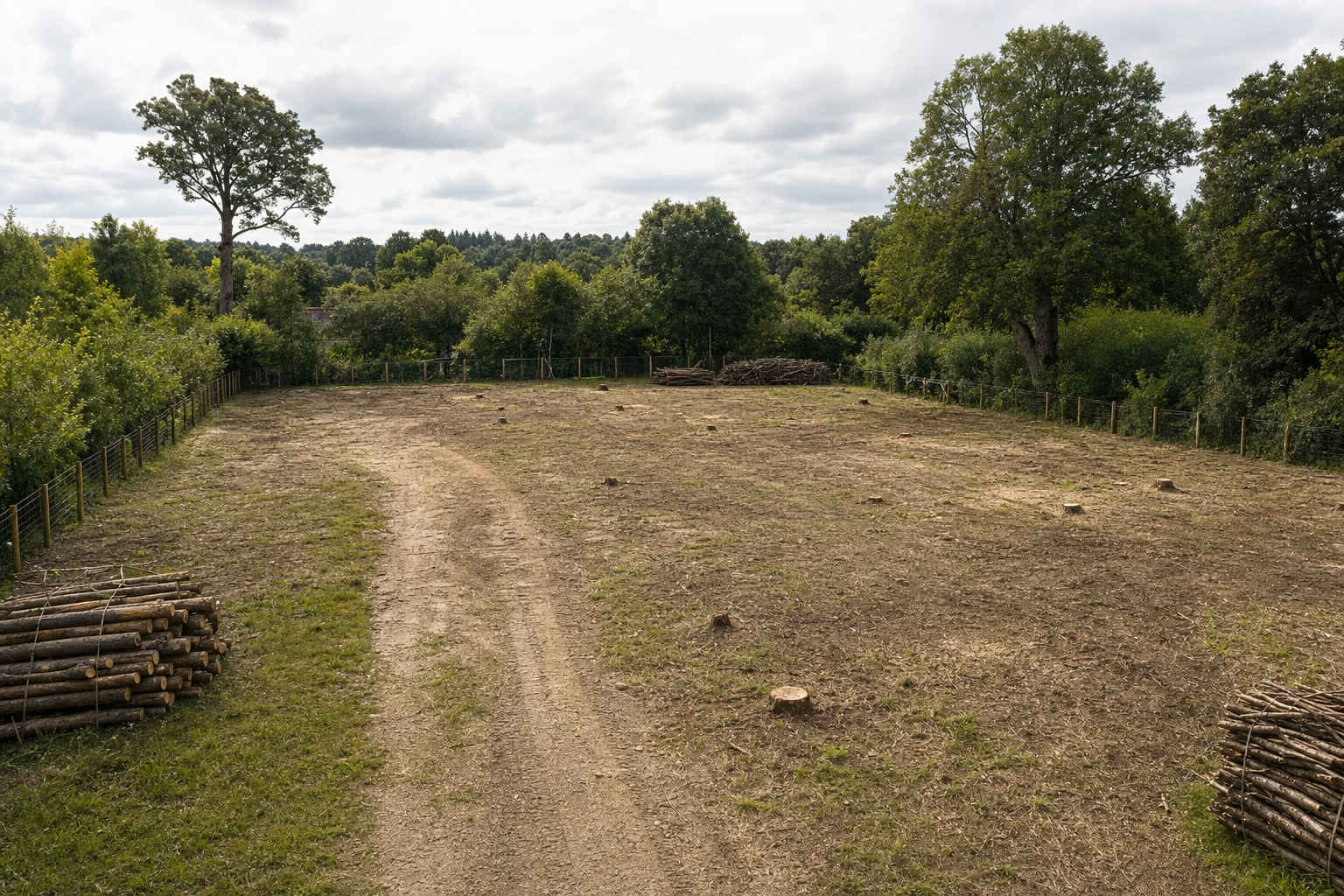
Clear larger or tougher ground in a planned sequence
When land has become heavily overgrown or needs preparing for construction, landscaping or access improvements, the job is no longer a simple garden tidy-up. We clear agreed areas of trees, scrub, woody vegetation and stumps in a sequence that supports safe movement through the site and sensible use of equipment. Before any machinery is chosen, we survey boundaries, structures, access routes, parking, overhead constraints, underground services and other hazards. That groundwork matters because the quickest route through a site on paper is often not the safest or most efficient route once cut material, machinery and limited access points enter the picture.
Planned for domestic plots and active commercial land
Some clearance jobs involve a large private plot that needs resetting before landscaping. Others involve commercial land where work areas, public movement and other contractors all need coordinating properly. We define the clearance scope clearly, then plan how vegetation will be cut, moved and removed without blocking the site halfway through the job. If stumps need dealing with, or particular trees need separate assessment before removal, we build that into the plan. The result is a more controlled start to whatever comes next, rather than a rushed first stage that creates extra problems for the second.
Frequently asked questions
Can you clear only part of a site?
Yes. The work does not have to be all or nothing. We can assess the land, agree the exact area to be cleared and plan the sequence around that scope. Clear boundaries are important on larger sites so everyone understands what is being removed and what must remain untouched.
How do you plan machinery access?
We look at entrances, surface conditions, turning space, overhead restrictions, underground services and how cut material will move through the site. That assessment helps us choose equipment that suits the land, instead of assuming larger machinery is automatically faster or more useful.
Can you work on active commercial sites?
Yes, where the site conditions and scope are suitable. We plan around staff, visitors, vehicles, public access and other contractors so the work area is properly managed. The exact arrangement depends on the land, the hazards present and how the wider site is operating on the day.