


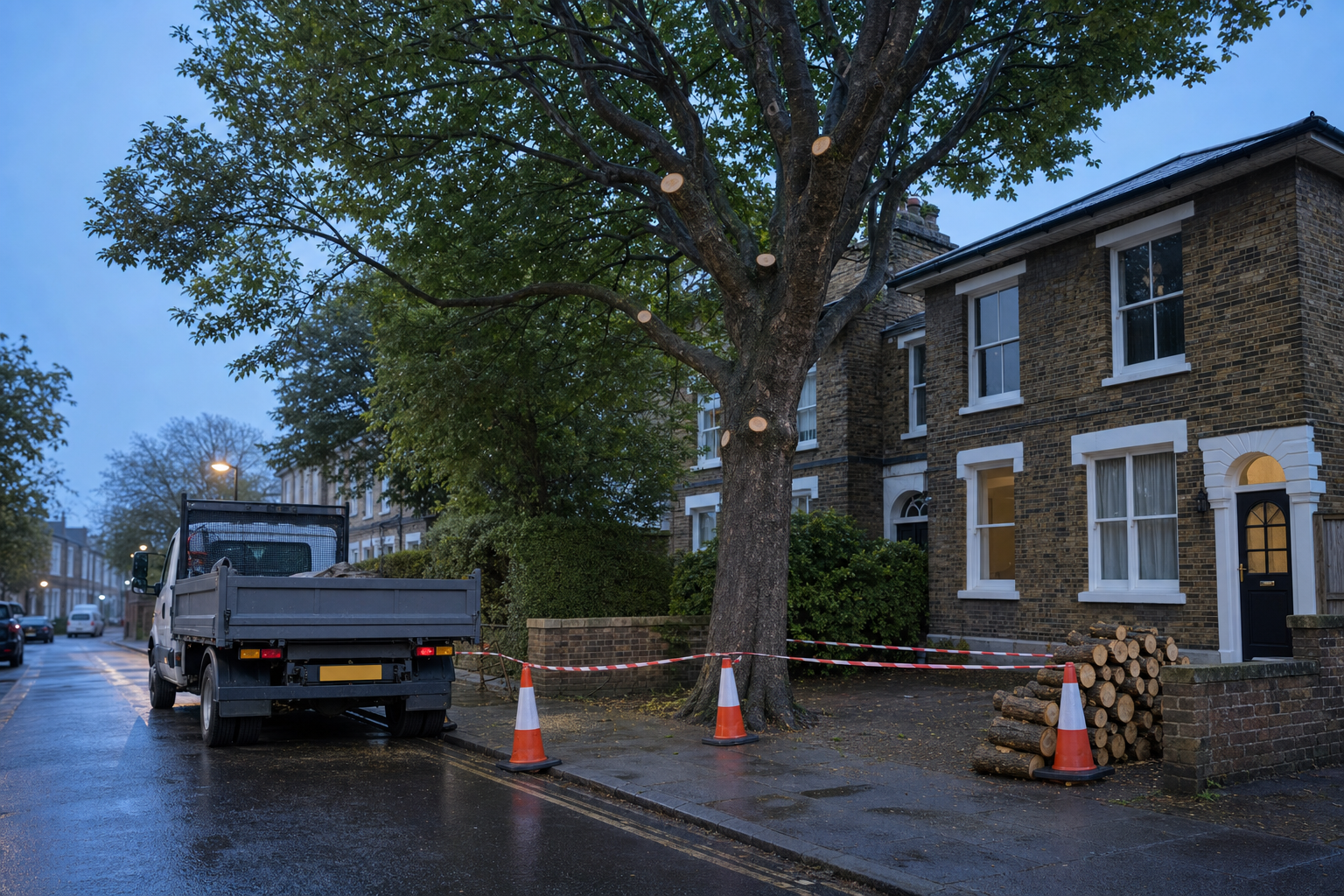
What matters in an emergency response
Safety first
We focus on stabilising the hazard and protecting the area before anything cosmetic happens.
Information that helps
Details about access, damage and nearby structures let us plan the safest arrival.
Clear next steps
If follow-on work is needed, we explain it plainly once the immediate risk is managed.
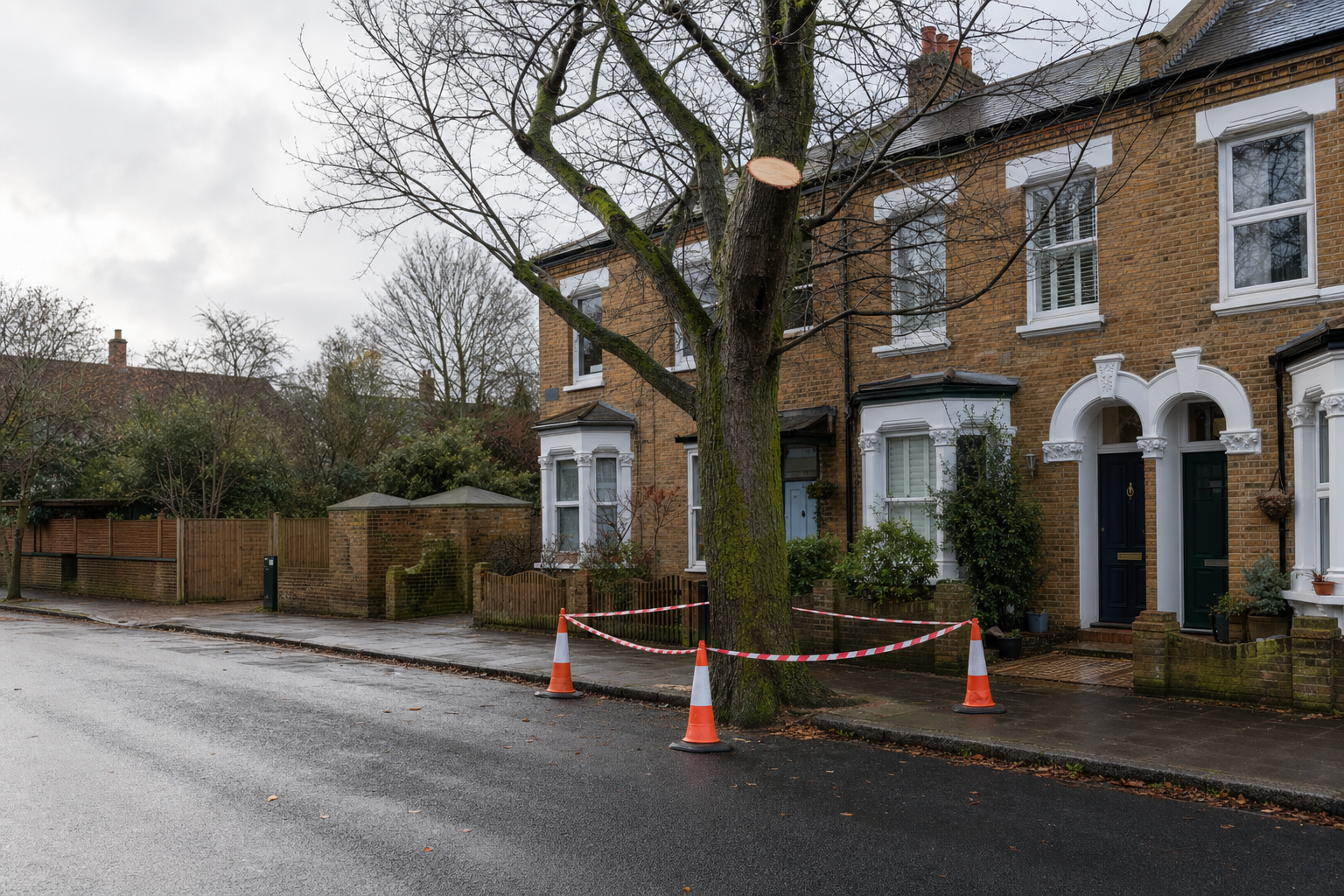
Urgent help when a tree has suddenly become unsafe
After high winds, heavy rain or sudden structural failure, the problem is usually obvious: a tree has fallen, a limb is hanging, or something that looked solid yesterday no longer does. In that moment, the priority is not tidying the garden. It is making the area safe. At Capital Tree Management Ltd , we respond to urgent tree hazards across London and begin with an immediate safety assessment of the affected tree, the ground around it and anything nearby that could be struck or pulled with it. Keep people, pets and vehicles clear if you can, and tell us about buildings, roads, utilities and any awkward access so we can arrive prepared for the actual risk rather than a rough guess.
Making the area safe before deciding the full fix
Emergency work can mean removing a fallen tree, cutting away dangerous limbs, stabilising a damaged tree or giving immediate advice on what should and should not be touched. The equipment and method depend on instability, suspended branches and the room available for controlled work. Sometimes the whole job can be completed there and then. Sometimes the right first step is to make the site safe and return for planned follow-on work. Either way, we explain what we are doing and why, so you are not left trying to decode events while standing beside a very unhelpful tree.
Frequently asked questions
What should I do before you arrive?
Keep everyone away from the affected area and do not try to move hanging limbs or cut anything yourself. When you call, tell us what has failed, whether buildings, vehicles or cables are nearby, and how easy the site is to reach. That helps us prepare for the risk properly.
Do you always remove the whole tree in an emergency?
Not always. The first aim is to make the area safe. That may mean removing fallen sections, cutting away unstable limbs or stabilising what remains. If a full removal is necessary, we explain that after the initial assessment and carry it out in the safest practical way for the site.
Can you attend urgent commercial tree hazards too?
Yes. We attend urgent problems at commercial sites as well as homes. If the area involves staff, visitors, vehicles or public access, tell us during the call so we can plan the safest working zone and the quickest way to reduce the immediate hazard.