


What air spading helps you understand
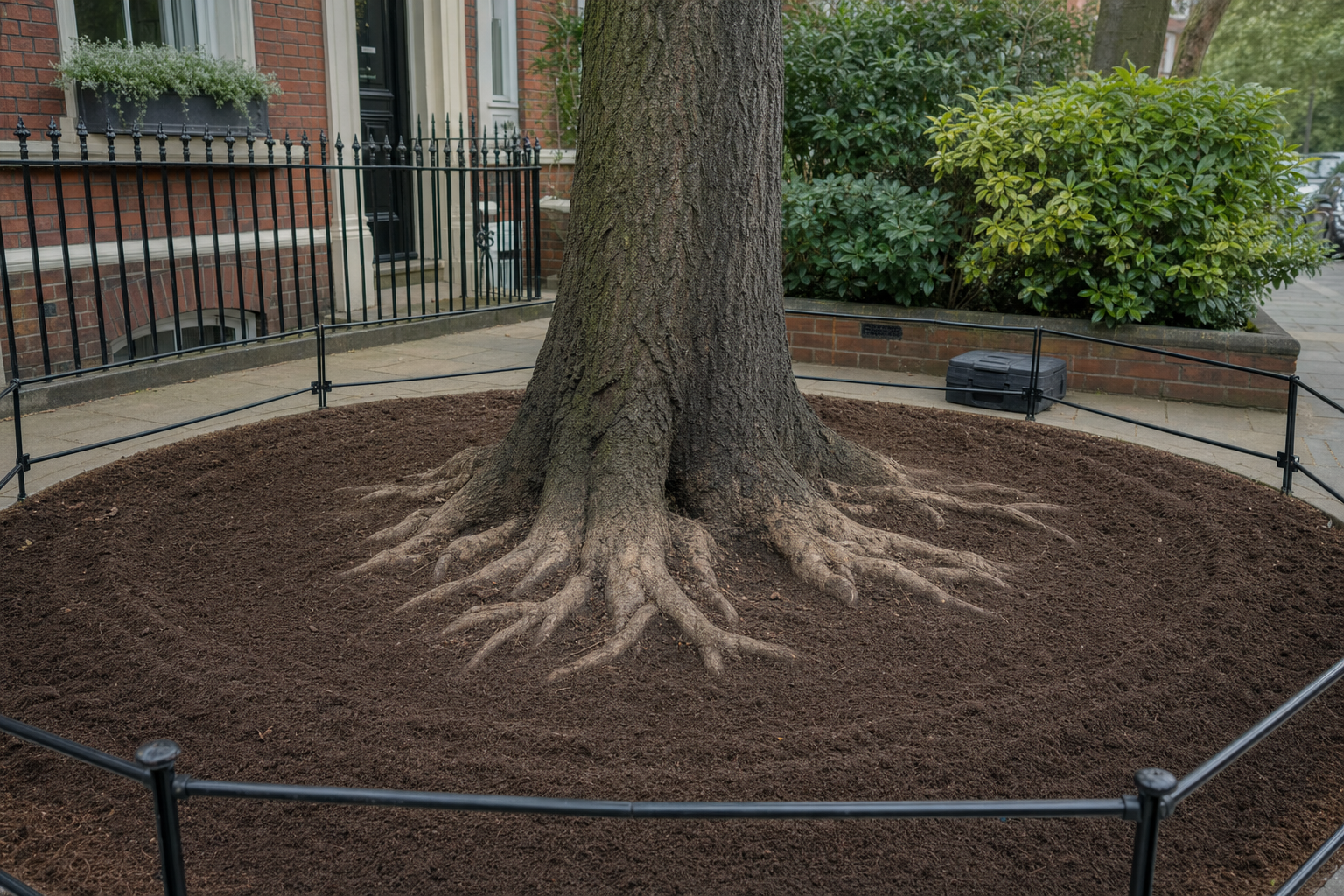
Root flare visibility
Buried collars and surrounding build-up can be exposed without rough digging around them.
Compaction investigated
We can assess and relieve dense soil that may be limiting root function and vigour.
Better next decisions
Visible root and soil findings make later care far more informed than guesswork.
Investigate the root area without attacking it with a spade
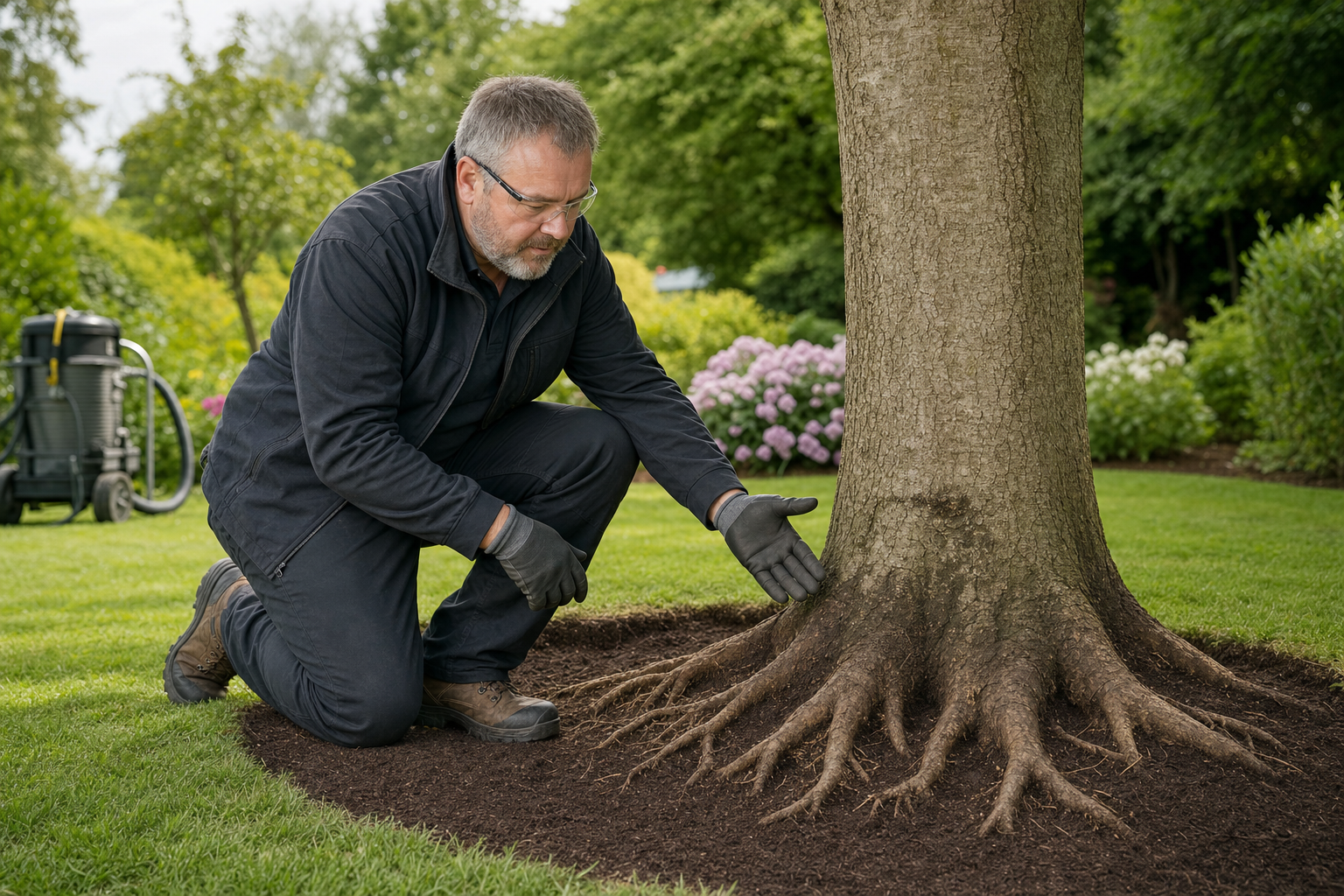
When a tree shows poor vigour, has a buried root collar or stands in badly compacted ground, the real problem may be below the surface. Air spading uses compressed air to loosen and remove soil around roots while reducing the risk of damage that conventional digging tools can cause. That makes it useful for exposing the root flare, investigating root conditions, relieving compaction and preparing the ground for improvement. It is a careful way to find out what is happening in the root zone without turning the investigation itself into the next problem. If you have ever watched someone stab around a valuable tree with a shovel, the appeal becomes fairly obvious.
Findings that guide soil and root-zone management
We define the area to be investigated, protect the site and then remove soil in a controlled way so exposed roots and conditions can be assessed properly. The exact scope depends on what is prompting the work, whether that is concern about root development, buried flare, compacted ground or a general drop in vitality. Once the roots and soil conditions are visible, the findings can inform practical next steps such as soil improvement, decompaction, better root-zone management or wider tree-care recommendations. The point is not simply to expose roots for the sake of it. It is to gain useful information with less impact than blunt excavation.
Frequently asked questions
When is air spading worth considering?
It is useful when poor vigour, compacted ground, a buried root flare or concern about root development suggests the issue may be below the surface. It can also help before soil improvement work, because it reveals how the root zone is actually sitting rather than relying on assumptions.
Does air spading damage roots?
The method is designed to reduce the risk of damage compared with conventional digging tools. It uses compressed air to loosen soil around roots instead of cutting through the area blindly. Care still matters, but it is a far lower-impact way to expose and inspect root conditions.
What happens after the investigation?
That depends on what is found. Air spading may lead to soil improvement, decompaction, better root-zone management or other tree-care recommendations. We explain the findings and the practical options, so the exposed area becomes the basis for a sensible plan rather than a half-finished exercise.