


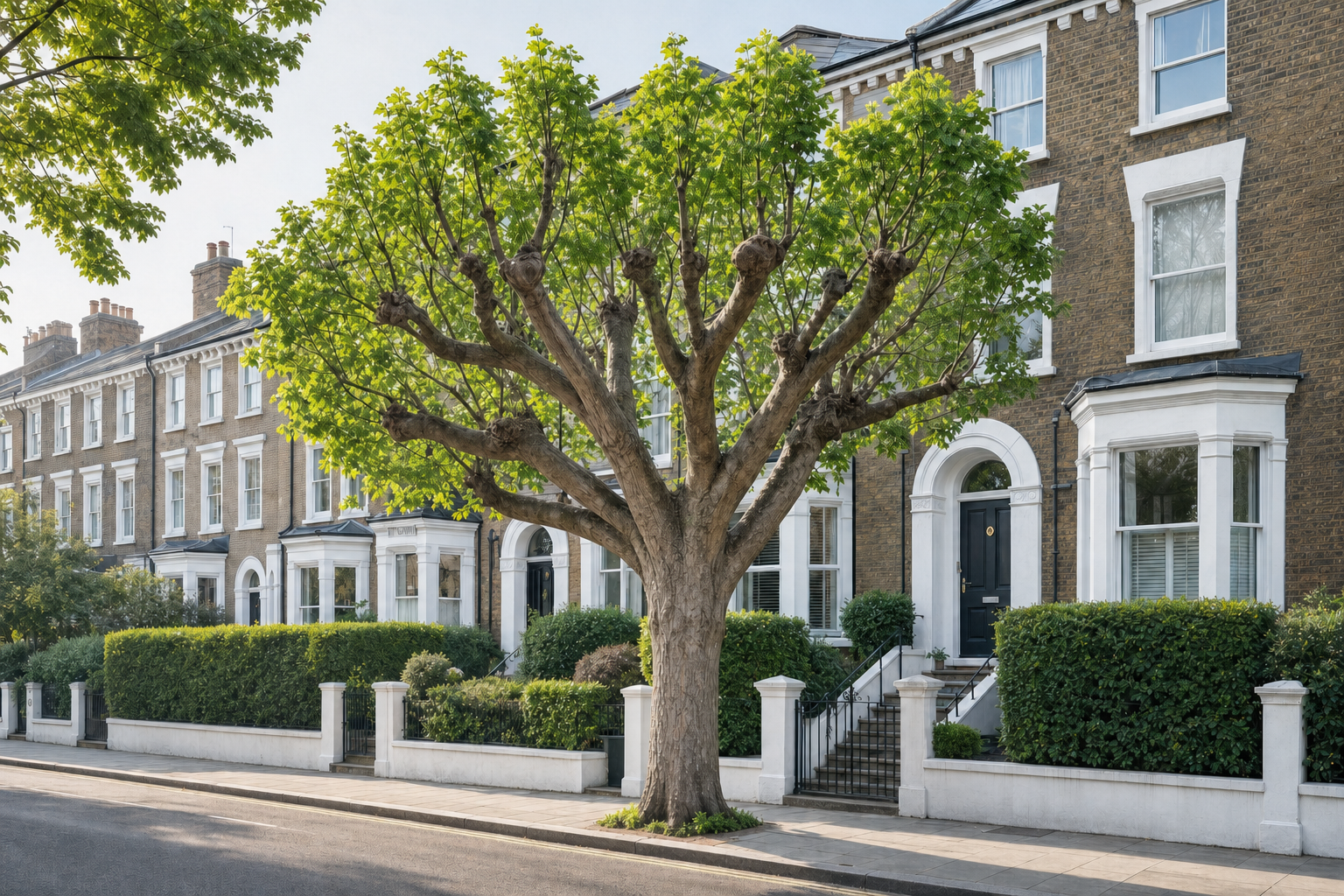
What pollarding can help you manage
Long-term size control
Pollarding can keep suitable trees within a more workable height and spread over time.
Framework maintained
Trees with an existing pollard history benefit from being managed on the right cycle.
Future growth explained
We set out what regrowth to expect so the result does not come as an unwelcome surprise.
Manage crown size through an established repeat system
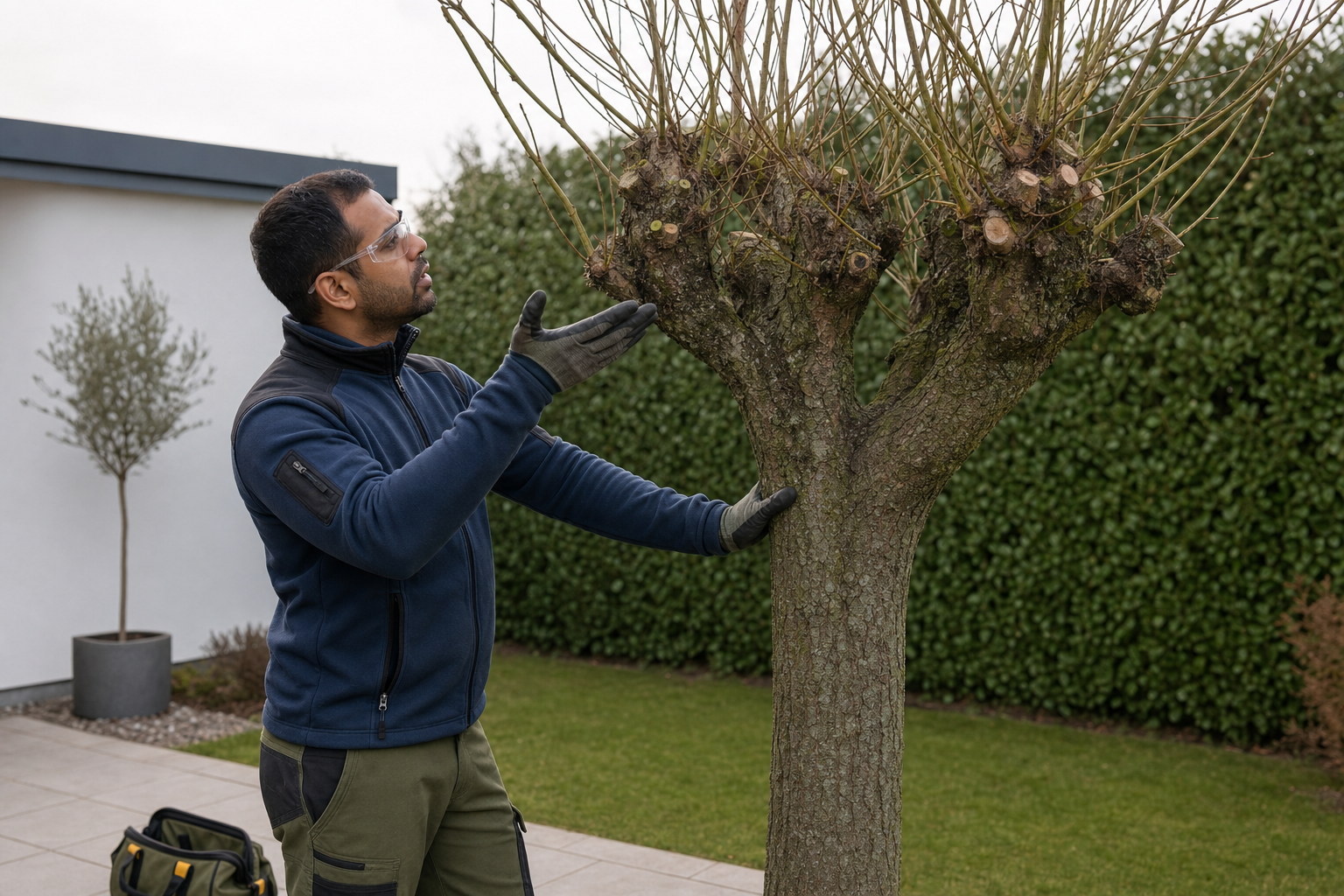
Pollarding is a specific crown-management method, not just a severe haircut for a difficult tree. It involves cutting back to established points to control size and encourage a managed cycle of regrowth. For some trees, that makes sense where long-term size control or clearance is needed. It is also commonly used to maintain trees with an existing pollard history, where staying on the cycle matters. The key point is that maintaining an established pollard is very different from starting a brand-new pollarding regime on a mature tree. We assess the species, age, condition and previous cuts before recommending it, because not every large tree is a good candidate simply because it has become inconvenient.
The timing and repeat cycle matter as much as the first cut
After pollarding, strong new shoots are expected. That is part of the process, not a sign the work failed. What matters is managing that regrowth on an appropriate cycle so the tree remains stable and the crown does not drift back into the same problem. We explain whether you are looking at maintenance of an existing framework or the careful start of a new regime, and what future visits may be needed. That gives you a clearer picture of the commitment involved, which is useful because pollarding only works well as planned management, not as a one-off act of frustration with a tree that got too big.
Frequently asked questions
Is pollarding the same as crown reduction?
No. Crown reduction reduces the canopy while keeping a broader natural framework. Pollarding cuts back to set points as part of a repeating management system. They solve different problems, and the right choice depends on the tree's species, history and the long-term aim for the crown.
Can any large tree be pollarded?
Not sensibly. Suitability depends on species, age, condition and whether the tree already has a pollard history. Starting a new regime on a mature tree is not automatically appropriate. We assess the tree first and recommend pollarding only where it fits the structure and future management plan.
How often does a pollarded tree need repeat work?
The cycle varies with the species, the tree's vigour and the site objective. After the first work, strong shoots usually develop and should be managed at suitable intervals. We explain the likely maintenance pattern during the assessment so you know what ongoing care the tree will need.